
The snack counter is changing. Croquettes, bitterballen and sausage rolls are going plant-based, and wholesalers keep asking producers for a vegan version that eats like the original. The hardest part is the filling: it needs the bite and pull of slow-cooked meat, and it has to survive a production line. That is exactly where young dried jackfruit fits: a fibre that looks and behaves like minced meat and takes on the flavour of your ragout.
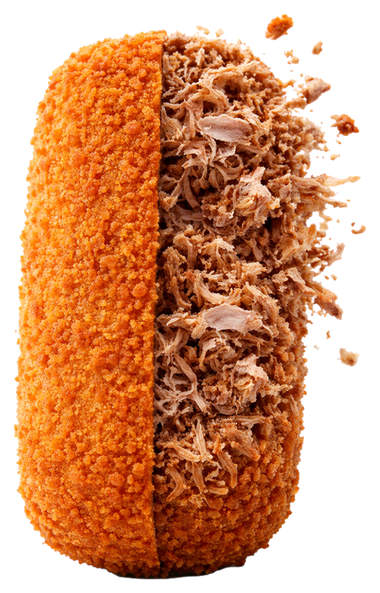
What a snack filling demands
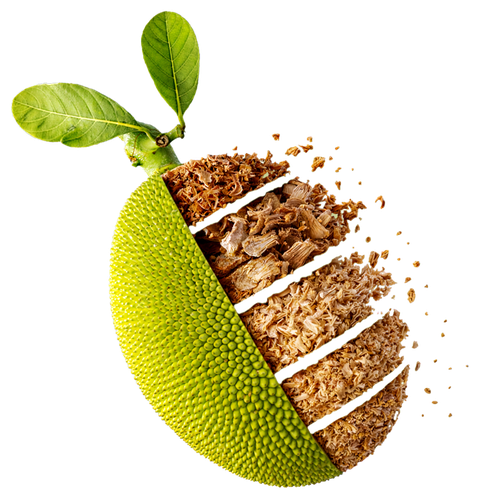
A filling for a croquette or sausage roll goes through a lot: simmering into a ragout, cooling, forming, breading, freezing and frying. An ingredient has to keep its structure through all of those steps and still deliver bite in the final product. Young jackfruit is harvested unripe, so it is neutral in taste, with fibres that pull apart like slow-cooked meat and absorb the seasoning of whatever ragout or roux they are folded into. The guest tastes your recipe, carried on a fibre that behaves like meat.
A short declaration to build on
Because jackfruit is a fruit, the base itself adds no declarable allergens to your recipe. Our dried jackfruit fibres are nothing but young jackfruit: dried, with no additives or preservatives, and certified organic. The allergen status of your finished snack depends on the rest of the formulation, think of the flour in the roux and the breading, but the filling starts from a clean sheet.
Brown or white, cut to your spec
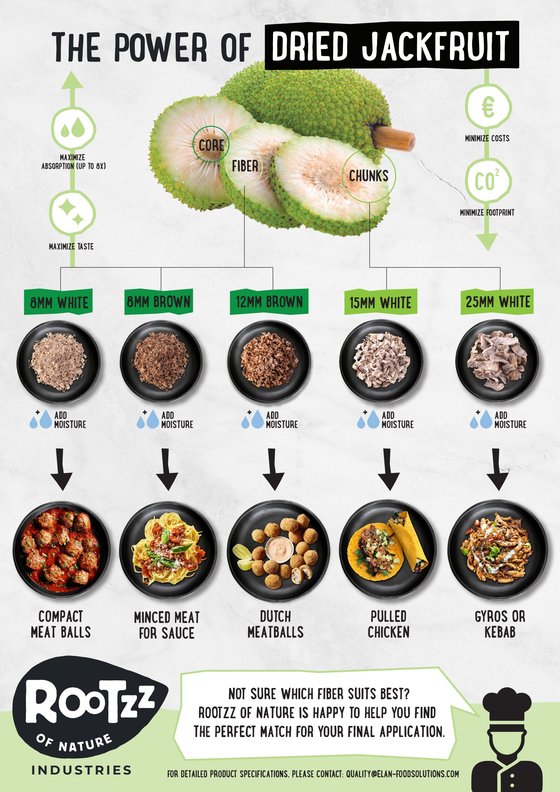
We oxidise the jackfruit in Sri Lanka, close to the harvest. That gives the fibres a brownish colour and the look of minced meat, so they blend naturally into a croquette or bitterbal filling. Prefer a lighter filling? A white version is available too. The fibres come in cuts from 8 mm to 25 mm and store at ambient temperature, which makes them easy to hold as a dry stock ingredient.
Cook the ragout and the fibres together
Our advice for croquettes and bitterballen: cook the dried fibres and the ragout together in the cooking kettle. The fibres rehydrate in the ragout itself, so the flavour is drawn deep into the fibre instead of sitting on the outside. Count on a rehydration ratio between 1:6.5 and 1:11, depending on the cut and how much moisture you let the fibres take up. One kilo of dry fibres turns into many kilos of filling, which also keeps transport and storage efficient.
From bench test to production line
Developing a snack is more than a recipe. Through our product development support we work with developers on formulation and texture, private label adaptation, packaging and labelling, and the step from prototype to pilot run and full production.
Test it in your own kitchen or lab
Request a free trial package to run your first ragout trials, or contact us to discuss your snack concept.